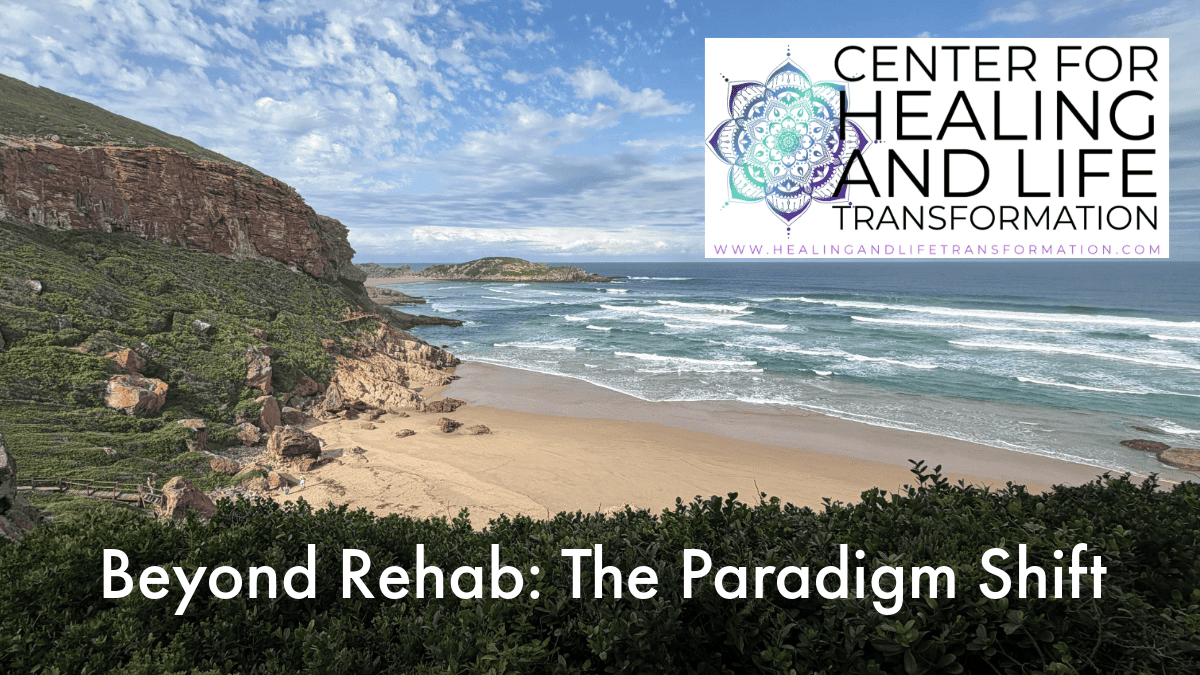
Alternatives to Rehab: A Root-Cause Approach to Addiction
If you’ve already been through rehab or even a luxury rehab — maybe more than once — and found yourself back where you started, you’re not alone, and you’re not failing at recovery. A growing number of people are looking for alternatives to rehab or perhaps Non-12-step recovery programs that go further than managing the addiction itself and instead address the personality patterns underneath it. This article explains why traditional rehab doesn’t work for everyone, what an addictive personality actually is from a psychological perspective, and what a root-cause alternative looks like in practice. Thank goodness the Holistic alternatives to addiction treatment and Holistic addiction recovery retreats around the world have made massive strides in making sure the folks who don’t want to again do the old styled rehab centre circuit have many good choices today. Many different alternatives mean many alternative people can now find help that they can relate to, engage with and work through without feelings of resistance.
Why Traditional Rehab Doesn’t Work for Everyone
Conventional rehab programmes are built around a fairly standard model: detox, a fixed group curriculum, and a 12-step framework that asks you to accept powerlessness over the substance. For many people, this model works well and saves lives. But for others — particularly high-functioning individuals, people who’ve cycled through multiple programmes, or people who resist the “powerlessness” framing — it doesn’t hold.
The most common reason isn’t lack of willpower or commitment. It’s that the substance or behaviour was never the actual problem — it was the symptom. Standard rehab is designed to interrupt the addictive behaviour. It is not always designed to work through the underlying psychological pattern that generated the behaviour in the first place: the perfectionism, the need for control, the fear of abandonment, the inability to sit with discomfort. When that pattern is left untouched, the addiction — or a new one — tends to resurface once the structure of the programme is removed.
This is the gap that a non-12-step, root-cause approach to addiction treatment is designed to close.
What Is an “Addictive Personality”?
The term “addictive personality” is used loosely in popular culture, so it’s worth being precise about what it means clinically. It doesn’t describe a fixed trait you either have or don’t have. It describes a cluster of coping patterns — usually formed early, often in response to unmet emotional needs, unprocessed trauma, or chronic stress — that make a person more likely to reach for external regulation (a substance, a behaviour, a relationship) to manage internal discomfort.
These patterns typically show up as one or more recognisable archetypes: the Controller who uses substances to manage anxiety about losing control, the Perfectionist who uses them to quiet an inner critic that never rests, the Codependent who uses them to cope with a relationship that isn’t meeting their needs, or the Anxious personality who uses them to self-soothe in the absence of any other regulation strategy. Naming the specific pattern matters, because it changes what treatment actually needs to accomplish. Treating “addiction” in the abstract misses the point if the real work is teaching someone how to regulate anxiety without a substance, or how to set a boundary instead of numbing out.
What a Root-Cause Alternative to Rehab Looks Like
At the Center for Healing and Life Transformation (CHALT), our residential programme on South Africa’s Garden Route is built specifically for people who’ve found that standard rehab addressed the behaviour but not the pattern underneath it. Rather than a fixed group curriculum, the work is structured around what we call the Paradigm Process — a framework that maps the specific personality pattern driving the addictive behaviour to the underlying psychological need it was trying to meet, and builds a personalised path back to a more stable, self-regulated way of relating to life.
In practice, this means:
- Individualised clinical assessment to identify the specific pattern at play, rather than a one-size-fits-all diagnosis of “addiction.”
- One-on-one psychological work alongside group process, so the underlying trauma or unmet need gets addressed directly rather than only through peer sharing.
- A private, residential setting that removes the stigma and group-size pressure some clients find counterproductive in larger institutional programmes.
- A structured 12-week pathway with a defined clinical team, rather than an open-ended or purely peer-led model.
- No requirement to identify as powerless over the substance — the goal is self-regulation and agency, not lifelong identification with the addiction.
This approach won’t be the right fit for everyone, and it isn’t a replacement for medical detox where that’s clinically necessary — that should always be handled by qualified medical professionals first. What it offers is a next step for people who’ve done the standard programme, stayed sober for a while, and then found themselves back in the same pattern because the pattern itself was never the focus. This means you can use tools to treat the personality, fear addiction, codependency, past traumas etc. while you navigate one of the Best alternatives to Rehab that suits you specifically.

Is This Approach Right for You?
A root-cause, addictive-personality-focused approach tends to fit best for people who recognise some of the following in themselves:
- You’ve completed rehab before — possibly more than once — and the underlying anxiety, perfectionism, or emotional pattern never actually changed.
- You function well externally (career, family, appearances) which has made it hard to be taken seriously by standard programmes built around visible crisis.
- You’re resistant to the “powerlessness” or disease-only framing and want to understand the psychological “why,” not just manage the behaviour.
- You want privacy — a smaller, residential, non-institutional setting rather than a large group facility.
If several of these resonate, it’s worth a conversation with a qualified clinician about whether a root-cause programme is the right next step for you.
Frequently Asked Questions
What’s the difference between rehab and an addictive-personality treatment programme?
Standard rehab is generally structured around interrupting a specific addictive behaviour, often within a 12-step framework. An addictive-personality-focused programme works one level deeper — identifying and treating the psychological pattern that generates the addictive behaviour in the first place, with the aim of reducing the likelihood of the pattern resurfacing in a different form.
Is a non-12-step programme as effective as traditional rehab?
Effectiveness depends heavily on the individual, the substance or behaviour involved, and whether medical detox is required. There is no single approach that works for everyone. Non-12-step, psychologically-oriented programmes tend to be a better fit for people who have already tried a 12-step model and found it didn’t address the underlying pattern. A qualified clinician can help assess fit.
Do I need to detox first before starting a root-cause programme?
If physical dependency is involved, medical detox under qualified supervision should always come first. A root-cause psychological programme is generally the next step after detox and physical stabilisation, not a replacement for it.
What does “addictive personality” actually mean?
It refers to a set of coping patterns — not a fixed trait — that make someone more likely to use an external substance or behaviour to regulate internal discomfort. Common underlying patterns include perfectionism, chronic anxiety, codependency, and unresolved control needs. Identifying the specific pattern is central to effective, lasting treatment.
Where is this type of treatment available in South Africa?
CHALT operates a private residential programme on the Garden Route, in Knysna offering a root-cause, addictive-personality-focused alternative to standard rehab.
10 Reasons people choose the Best alternatives to Rehab
Choosing a holistic, spiritual wellness and personal transformation experience as one of the Best alternatives to Rehab—such as the immersive work done at the Center for Healing and Life Transformation (CHALT)—offers distinct operational, emotional, and systemic advantages over standard institutional programs.
Here are 10 compelling benefits for individuals looking to address the root causes of their personality blocks, defense mechanisms, and emotional patterns without checking into, wanting or needing a clinical facility:
1. Zero Career Interruption
Traditional facilities require a complete operational shutdown—asking professionals to leave their businesses, clients, and leadership roles for weeks on end. A tailored wellness experience allows high-functioning individuals to undergo deep personal transformation while maintaining vital professional oversight via a structured, integrated schedule.
2. A Paradigm Shift from “Sick” to “Growing”
Clinical environments inherently operate on a pathology model, focusing heavily on labels, diagnoses, and what is “broken.” A spiritual and wellness-centered framework shifts the narrative entirely. It views the individual not as a patient to be cured, but as an intact soul uncovering hidden blocks, cultivating higher consciousness, and engaging in profound personal development. This makes the Best alternatives to Rehab so much more popular.
3. Deeper Access to Root Causes (Not Just Symptom Management)
Standard programs often focus heavily on behavior modification—stopping the unwanted action or managing the immediate symptom. A spiritual healing approach targets the energetics of the issue, tracing personality defenses back to their core emotional and spiritual origins so lasting, self-directed regulation can occur.

4. Absolute Discretion and Anonymity
As number 4 of the 10 Reasons people choose the Best alternatives to Rehab, the institutional nature of conventional treatment centers leaves a paper trail, insurance records, and a specific social footprint. A boutique wellness and life transformation retreat offers absolute privacy. It is framed as a period of executive rejuvenation, self-reflection, and strategic life alignment, completely protecting the participant’s professional reputation.
5. Mastery of Everyday Self-Regulation
In an insulated clinical bubble, it is easy to feel balanced. The real challenge is maintaining that balance in the real world. A wellness experience emphasizes practical, everyday tools—like daily alignment checklists, contemplative practices, and structured self-regulation frameworks—that are instantly applicable to daily life.
6. Transcending the Limitations of the 12 Steps
While the traditional 12-step model helps many, its focus on powerlessness and lifelong labels doesn’t resonate with everyone. A spiritual healing model prioritizes empowerment, unitive consciousness, and the realization that you possess the inner architecture necessary to reshape your reality and master your mind.
7. Custom-Tailored, One-on-One Agendas
Traditional facilities often rely heavily on rigid, one-size-fits-all group therapy schedules to manage high volumes of patients. A bespoke wellness experience allows for highly individualized, intensive one-on-one sessions that respect the unique psychological and spiritual blueprint of the individual.
8. Healing in a High-Vibrational Environment
Healing deep-seated emotional wounds requires immense vulnerability, which is difficult to access in a sterile, clinical setting. Immersive wellness experiences utilize natural, peaceful, and inspiring settings to soothe the nervous system, lower cortisol levels, and naturally open the mind to deep contemplative work.
9. Immediate Family and Relationship Integration
Clinical separations can create a jarring “re-entry shock” when returning to family systems. By utilizing an integrated wellness approach, individuals can immediately apply their insights, boundaries, and emotional regulation skills to their primary relationships in real time, preventing the relational friction that often follows traditional isolation.
10. Long-Term Sustainable Lifestyle Architecture
Instead of preparing a patient for a lifetime of “managing a condition,” a comprehensive wellness experience is the nest rehab alternative that focuses on building an optimized lifestyle. Participants leave with a deeply internalized personal framework—bridging psychological insight with spiritual practice—designed to foster long-term resilience, vocational clarity, and genuine life fulfillment. That’s our 10 Reasons people choose the Best alternatives to Rehab.
About the author: Mark L. Lockwood BA(hons(psy) is an addiction specialist with 25 years experience, life strategist, coach, and author, and founder of the Center for Healing and Life Transformation (CHALT), a private residential wellness centre on South Africa’s Garden Route. He developed the Paradigm Process, a proprietary framework for treating the personality patterns underlying addictive behaviour.
This article is for general informational purposes and does not constitute a diagnosis or a substitute for individualised clinical assessment. If you are in crisis or experiencing withdrawal symptoms, please seek immediate medical attention.
